O Sol e as estrelas parecem ser fontes inesgotáveis de energia. Essa energia resulta de reações nucleares, nas quais a matéria é convertida em energia. Conseguimos dominar esse mecanismo e utilizamo-lo regularmente para produzir eletricidade. Atualmente, a energia nuclear fornece cerca de 16% da eletricidade mundial.
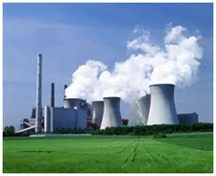
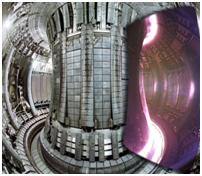
A fissão nuclear (a divisão de núcleos) e a fusão nuclear (a união de núcleos) são processos nucleares que resultam ambos na libertação da energia de que o núcleo resultante já não necessita, depois de a fissão ou a fusão nuclear terem ocorrido.
O termo «fissão» significa «divisão», pelo que na fissão nuclear a divisão dos núcleos atómicos produz tipicamente dois ou três núcleos mais pequenos. Verificamos que, quando ocorre a fissão nuclear, a massa dos produtos da reação é menor do que a massa original do núcleo ou das partículas que reagem, o que resulta na libertação da energia que servia para manter coeso o núcleo original. É este o caso dos elementos com núcleos pesados (como o urânio).
No mesmo contexto, o termo «fusão» significa combinar núcleos entre si. Na fusão nuclear, a massa total do produto da reação (também chamado núcleo filho) continua a ser menor do que a massa original do núcleo ou das partículas que reagem, apesar de dois núcleos estarem agora combinados. Isto acontece porque é necessária menos energia para que átomos com núcleos leves (de elementos como o hélio) existam fundidos do que separados. Por isso, é libertada energia quando ocorre a fusão de núcleos leves. Na natureza, a fusão nuclear é mais comum do que a fissão e obtém-se mais facilmente com elementos leves como o hidrogénio, o hélio e o carbono.De um modo geral, se um núcleo é formado «colando» nucleões uns aos outros, a sua massa é menor do que a massa dos nucleões livres originais. Este efeito é conhecido como defeito de massa.
A unidade SI de energia, o joule (J), é demasiado grande para medir a energia libertada por um único núcleo. Por convenção, usamos para isso o MeV (milhão de eletrão-volt), em que 1 MeV = 106 eV e 1 eV = 1,602177x10⁻¹⁹ J.
Um processo nuclear que liberta uma grande quantidade de energia é a fissão de um núcleo pesado. Por exemplo, quando um único núcleo de 235U sofre fissão, são libertados cerca de 200 MeV. Trata-se de muita energia, como se pode ver por algumas comparações:

 BG
BG DA
DA DE
DE EN
EN ES
ES FI
FI FR
FR GR
GR HU
HU IT
IT NL
NL NO
NO PL
PL RO
RO SE
SE